10 SEO Mistakes You Are Making in 2026
Google's algorithm has evolved dramatically. If you're still doing SEO like it's 2022, here are the mistakes that are costing you organic traffic, and how to fix them.

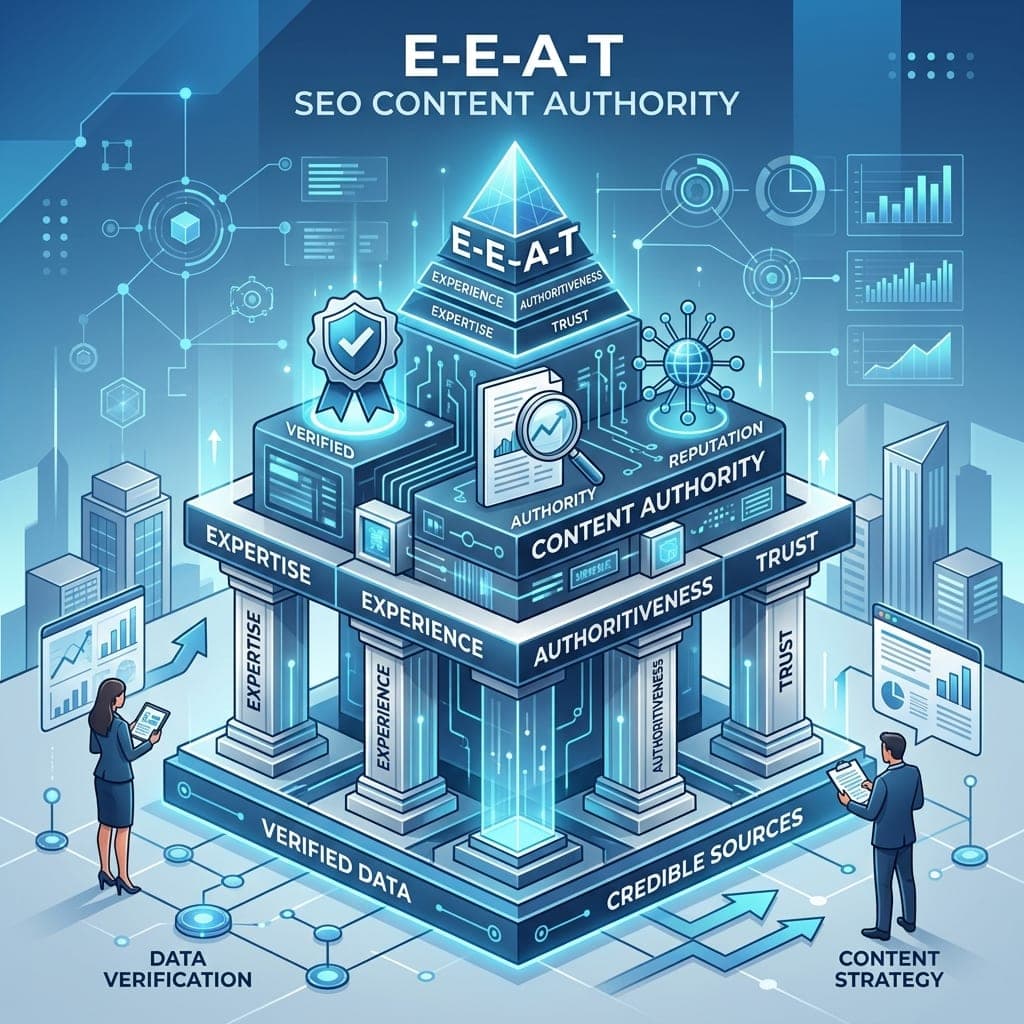
Search engine optimisation in 2026 is a fundamentally different game from what it was three years ago. Google's AI Overviews, the Helpful Content Update, and the shift toward E-E-A-T (Experience, Expertise, Authoritativeness, Trustworthiness) have rewritten the playbook. If your traffic has plateaued or declined, the answer is almost certainly one of these ten mistakes.
Mistake 1: Publishing Thin or AI-Generated Content Without Adding Value
The Helpful Content Update targets content that exists to rank rather than to genuinely help readers. Bulk-generated articles with no original insight, no real-world examples, and no author expertise are being systematically demoted or deindexed.
Google's classifier now evaluates whether content demonstrates first-hand experience. A product review written by someone who has never used the product fails this test. An article about web development written by someone who has never written code fails this test.
The fix: Every piece of content should have a clear answer to "What does this add that the reader can't find elsewhere?" If you're using AI, use it to assist your writing, not replace it. Add original data, case studies, or expert commentary that AI can't fabricate.
Mistake 2: Ignoring Core Web Vitals
LCP (Largest Contentful Paint), CLS (Cumulative Layout Shift), and INP (Interaction to Next Paint) are hard ranking signals in competitive queries. A site with consistently poor Core Web Vitals is fighting the algorithm every day.
The most common offenders:
- LCP: unoptimised hero images, missing
priorityattribute, no server rendering - CLS: images without explicit dimensions, dynamically injected banners above content
- INP: JavaScript-heavy pages that block the main thread
The fix: Run your pages through Google PageSpeed Insights. Fix the issues flagged in the "Core Web Vitals" section first. Prioritise your most-trafficked pages. For a comprehensive approach to web performance, server rendering and image optimisation are the highest-leverage fixes.
Mistake 3: Missing or Broken Schema Markup
Structured data (JSON-LD) tells search engines exactly what your content is, an article, a product, a FAQ, a job listing, a local business. Without valid schema, you're ineligible for rich results: star ratings, FAQ snippets, product prices, breadcrumbs in search results.
Rich results can double or triple your click-through rate on the same ranking position. That's free traffic you're leaving on the table.
The fix: Implement schema markup for every page type. Use Google's Rich Results Test to validate. At minimum, every blog post needs BlogPosting schema, every product page needs Product schema, and every page with FAQs needs FAQPage schema.
Mistake 4: Chasing Keywords Instead of Topics
Targeting isolated long-tail keywords without building topical authority is a 2019 strategy. Google's Helpful Content system rewards sites that comprehensively cover a topic area, not sites that write one article optimised for one keyword.
The modern approach is topic clusters: a pillar page that broadly covers a topic, with multiple supporting articles that go deep on subtopics, all interlinked.
The fix: Map your content to topic clusters. For each service or product area, create a comprehensive pillar page and 5–10 cluster articles covering specific angles. Internal links between them distribute authority and signal topical depth to Google.
Mistake 5: Neglecting E-E-A-T Signals
Experience, Expertise, Authoritativeness, and Trustworthiness, Google evaluates your site against these criteria for all content, but especially for YMYL (Your Money or Your Life) topics: finance, health, legal, and anything that could significantly impact someone's decisions.
The fix:
- Add author bios with credentials and expertise
- Link to author profiles on authoritative external sites (LinkedIn, personal site)
- Earn backlinks from respected publications in your industry
- Include citations and link to primary sources
- Add verifiable business information (address, phone, registered company details)
Mistake 6: Skipping Meta Descriptions
An auto-generated or missing meta description is a squandered opportunity. Meta descriptions don't directly affect rankings, but they control what users see in search results. A compelling meta description is the difference between a click and a scroll-past.
Google rewrites your description roughly 65% of the time when your original doesn't match the query, which means when you do write a good one, it shows for the exact queries you're targeting.
The fix: Write unique meta descriptions (150–160 characters) for every indexable page. Write them like ad copy, they should create curiosity and communicate clear value. Include your primary keyword naturally.
Mistake 7: No Internal Linking Strategy
Internal links serve two purposes: they help users navigate your site, and they tell Google which pages are important and how your content relates to each other. A new blog post with no internal links is an island, it gets little crawl priority and no inherited authority.
The fix: When publishing new content, link to it from 2–3 existing relevant pages. When writing new content, link from it to your key service or product pages. Use descriptive anchor text, "web development services" is more useful to Google than "click here."
Mistake 8: Ignoring Page Titles and H1 Tags
Duplicate title tags, missing H1s, or H1s that don't match the page's primary topic are surprisingly common errors that directly affect how Google interprets your content.
Each page should have exactly one H1 that clearly states the page's primary topic, incorporating your target keyword naturally. The title tag should be unique (50–60 characters) and compelling enough to earn a click.
The fix: Audit all pages with a crawl tool (Screaming Frog, Ahrefs Site Audit). Flag pages with missing H1s, duplicate titles, and title tags over 60 characters. Fix the highest-traffic pages first.
Mistake 9: Building Links Poorly
In 2026, a handful of high-quality, contextually relevant backlinks from authoritative sites in your niche are worth more than hundreds of generic directory links or low-quality guest posts.
Link schemes, paid link networks, and mass outreach with templated emails are actively penalised. Google's spam detection has improved dramatically.
The fix: Earn links by creating genuinely useful content: original research, data studies, industry surveys, free tools, and comprehensive guides. Reach out personally to relevant publications when you have something worth sharing. One link from a domain with real editorial standards beats 50 from low-quality sites.
Mistake 10: Not Tracking What Actually Matters
Vanity metrics like total impressions or raw keyword rankings don't tell you whether SEO is growing your business. Tracking them in isolation leads to poor decisions.
The metrics that matter:
- Organic traffic to pages that convert (service pages, product pages, landing pages)
- Organic traffic by topic cluster, is your authority growing in your key areas?
- Click-through rate (CTR) by query, are your titles and descriptions earning clicks?
- Core Web Vitals field data, real user performance, not just lab tests
The fix: Set up Google Search Console properly. Connect it to Google Analytics 4. Create a simple monthly report covering these four metrics. Let them guide your content and technical priorities.
Putting It All Together
SEO in 2026 rewards sites that genuinely serve their audience with fast, well-structured, expert content. The shortcuts are gone. The sites that win long-term are the ones that consistently publish valuable content, maintain technical excellence, and build real authority in their niche.
If you want a partner to build and execute an SEO strategy that works in 2026, Codolve's SEO services combine technical expertise with content strategy.
Frequently Asked Questions
How long does it take to see results from SEO improvements?
Technical fixes (speed, schema, structured data) can show results within weeks after Google re-crawls your pages. Content improvements typically take 3–6 months to show meaningful ranking changes. Link building results appear over 6–12 months. SEO is a long-term investment, the sites that commit consistently outperform those that treat it as a one-time project.
Is Google's AI Overviews hurting SEO traffic?
For informational queries, yes, AI Overviews can reduce clicks. The fix is to target transactional and commercial keywords more aggressively, build content that gets cited in AI Overviews (authoritative, well-structured content with clear answers), and focus on the full customer journey rather than just top-of-funnel traffic.
Should I still use keywords in my content?
Yes, but naturally. Keyword stuffing is penalised. The right approach is to write comprehensive content about your topic, the relevant keywords will appear naturally. Use a tool like Ahrefs or Semrush to understand what questions your target audience is asking and answer them thoroughly.
How important are backlinks in 2026?
Still very important for competitive keywords. For low-competition topics, great content and solid technical SEO can rank without backlinks. For high-competition topics, authoritative backlinks remain a significant differentiator. Quality matters far more than quantity.
What's the single highest-leverage SEO action for a new site?
Publish comprehensive, genuinely helpful content on a narrow topic until you dominate that topic. Don't try to rank for everything at once. Build authority in a specific niche first, then expand. This topical authority approach works faster and more durably than trying to compete broadly from day one.
Tags