AI Search Optimization: Winning Visibility in AI Answers
AI search optimization is how you earn citations in Google AI Overviews, ChatGPT, and Perplexity. Here is a practical playbook that actually gets you cited.

Ask ChatGPT, Perplexity, or Google's AI Overviews a real buying question and watch what happens. You do not get ten blue links. You get a written answer, a short list of cited sources, and a user who may never scroll to a search result at all. That shift is why AI search optimization has moved from a niche experiment to a line item that shows up in traffic reports. The old game was ranking a page. The new game is getting a machine to read your page, trust it, and quote it back to someone who is about to spend money. Those are related skills, but they are not the same skill, and treating them as identical is how good sites end up invisible in the surfaces that are quietly eating their top of funnel traffic.
This guide is the practical version. No breathless predictions about the death of Google, just what actually gets a page cited by answer engines in 2026 and how to build a repeatable program around it.
What AI Search Optimization Actually Changes
Classic SEO optimizes for a ranking. A crawler indexes your page, an algorithm scores it against a query, and you land somewhere on a list. The user does the rest of the work: they read the results, click, and judge for themselves.
AI search collapses that. A language model reads dozens of candidate pages, extracts the specific claims it needs, synthesizes them into one answer, and attributes a handful of sources. Your page is no longer competing for a click in a list. It is competing to be the sentence the model chooses to lift, and the citation it decides to show. That reframes almost every optimization decision.
Three practical consequences fall out of this. First, the model rewards clarity of individual claims over keyword density, because it is extracting facts, not matching strings. Second, being cited matters even when nobody clicks, because the citation itself builds brand recognition and the referral clicks that do land are unusually high intent. Third, you are now optimizing for several engines at once, and they do not agree. Google AI Overviews leans on its own index and trusted sources. Perplexity runs live retrieval and loves fresh, well structured pages. ChatGPT blends its training data with live browsing. A single tactic rarely wins all three, so AI search optimization is really a portfolio of overlapping bets.
How Answer Engines Choose What to Cite
You cannot optimize for a black box you do not understand, so start with the mechanics. Most AI search systems run some version of retrieval augmented generation. When a question comes in, the engine retrieves a set of candidate documents, ranks them for relevance, feeds the strongest into the model as context, and the model writes an answer grounded in that context with citations back to the sources it leaned on.
Every stage is a place to win or lose. If your page is not crawlable or not in the index, you never enter the retrieval pool. If it is retrieved but buried under vague prose, the model skips it for a cleaner source. If it is retrieved and clear but contradicts a more authoritative source, the model trusts the other one. Getting cited means clearing all three bars: be retrievable, be extractable, and be trustworthy.
What consistently earns citations across engines:
- Direct answers placed early. Pages that answer the question in the first paragraph, then expand, get quoted far more than pages that bury the answer under three sections of preamble.
- Specific, verifiable claims. Numbers, dates, named methods, and concrete steps are easy for a model to lift with confidence. Hedged generalities are not.
- Fresh, dated content. Retrieval systems favor recency for anything time sensitive. A visible, honest last updated date helps.
- Corroboration across the web. Models trust claims that show up consistently across independent sources. Being the only site making a claim is a liability, not an edge.
- Clean structure. Headings that match real questions, short paragraphs, tables, and lists all make extraction easier.
An AI Search Optimization Playbook You Can Run This Quarter
Here is the program we actually run for clients, in priority order. Do the top rows first; they carry the most weight for the least effort.
| Priority | Work | Why it moves the needle |
|---|---|---|
| 1 | Add a direct answer in the first 80 words of every key page | This is the text models lift most often |
| 2 | Rewrite headings as the questions users ask | Retrieval matches questions to heading text |
| 3 | Break dense prose into short paragraphs, lists, and tables | Easier extraction, cleaner citations |
| 4 | Add or fix structured data (FAQPage, Article, Product, Organization) | Feeds machine readable facts to engines |
| 5 | Publish original data, benchmarks, or firsthand results | Gives models something only you can supply |
| 6 | Build corroboration through digital PR and citations | Raises the trust score behind your claims |
| 7 | Track which pages get cited and iterate | Turns guesses into a feedback loop |
None of this is exotic. What separates sites that win at AI search optimization from sites that do not is discipline in doing the boring rows consistently, on every important page, rather than chasing a single clever trick.
Structure Content So a Model Can Lift It
The single highest leverage change is structural, and most teams skip it because it feels too simple. Write the answer first. If someone asks "how much does a custom website cost," the page should state a real range in the opening sentence, then explain the variables underneath. Models reward the page that leads with the answer and punish the one that makes them dig.
Use headings that mirror natural language questions rather than clever marketing labels. "How AI search optimization differs from SEO" gets retrieved for that question. "Reimagining Discovery" gets retrieved for nothing. Keep paragraphs short, two to four sentences, so a model can quote one without dragging in unrelated context. Reach for tables when you are comparing options and for numbered lists when you are describing a sequence, because both formats survive extraction intact while a dense wall of text falls apart.
One habit that pays off repeatedly: end each major section with a tight, self contained summary sentence that states the takeaway on its own. That sentence is frequently the exact text a model chooses to quote, because it needs no surrounding context to make sense.
Build the Entity and Authority Signals Models Trust
Extraction gets you into the answer. Authority keeps you there when a more trusted source disagrees. Language models weight sources heavily by how established and consistent the entity behind them appears, so entity building is now core to AI search optimization rather than a nice extra.
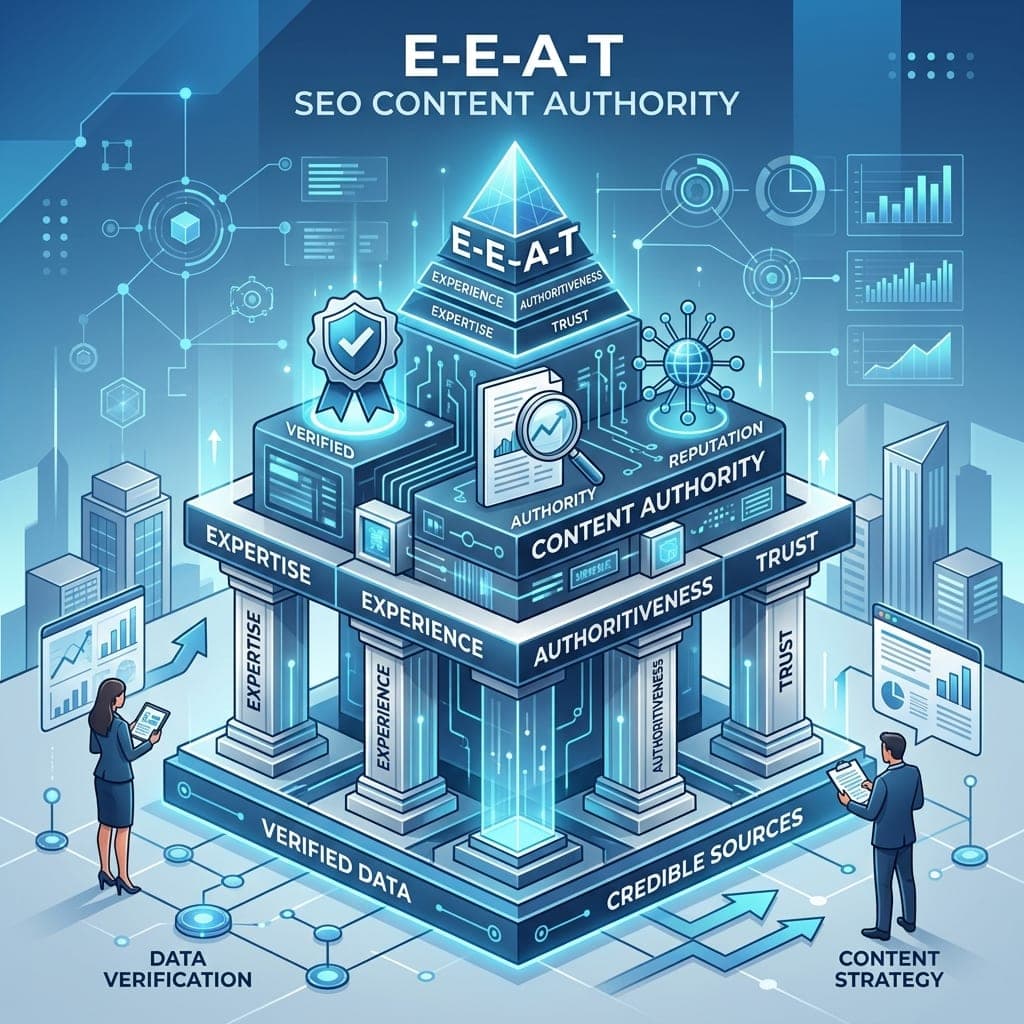
Make your organization legible as an entity. Maintain a thorough about page, keep your name, address, and contact details identical everywhere they appear, and mark up your organization with schema. Give your authors real bylines, real credentials, and real presence across the web, because models increasingly weigh who is making a claim, not just the claim itself. This is the same expertise and trust signal that Google's quality guidelines have pushed for years, now doing double duty for AI answers.
Then earn corroboration. When independent, credible sites reference the same facts you publish, models grow more confident citing you as the primary source. That means the unglamorous work still matters: original research others want to cite, genuine digital PR, expert contributions, and mentions in the directories and publications your industry actually reads. A claim that appears only on your own domain is fragile. The same claim echoed across a dozen trusted sources becomes a fact the model is comfortable attributing to you.
Technical Foundations You Cannot Skip
If AI crawlers cannot fetch and parse your content, none of the above matters. Confirm that the specific bots powering these engines are allowed in your robots rules; blocking them by accident is a surprisingly common own goal. Make sure critical content renders in the initial HTML rather than only after client side JavaScript executes, because some retrieval crawlers do not run scripts and will see an empty shell.
Structured data does real work here. A clean FAQPage block hands an engine ready made question and answer pairs, Article schema supplies author and date, and Product schema exposes price and availability as machine readable facts instead of pixels a model has to guess at.
{
  "@context": "https://schema.org",
  "@type": "FAQPage",
  "mainEntity": [
    {
      "@type": "Question",
      "name": "What is AI search optimization?",
      "acceptedAnswer": {
        "@type": "Answer",
        "text": "AI search optimization is the practice of structuring content and authority signals so that AI answer engines retrieve, trust, and cite your pages in their generated responses."
      }
    }
  ]
}
A newer convention worth adopting is an llms.txt file at your domain root, a plain text map that points AI systems to your most important content in a clean, parseable form. Adoption is still early and no engine treats it as a guarantee, but it is cheap to add and signals intent to be indexed well. Keep the fundamentals honest alongside it: fast pages, a valid sitemap, and content that reads like a person wrote it for another person.
Measuring AI Search Visibility
You cannot manage what you refuse to measure, and AI search resists the tidy dashboards SEO teams are used to. There is no single rank to track. Instead, build a panel of representative questions your customers actually ask, then check monthly whether the major engines cite you, cite a competitor, or ignore the topic entirely. This is tedious to do by hand, which is exactly why a growing set of tools now automate the checks across Google AI Overviews, ChatGPT, and Perplexity.
Watch your analytics for the fingerprints of AI referral traffic: small volumes of sessions from these platforms that convert unusually well because the visitor arrived pre educated by the answer that cited you. Track share of citation the way you once tracked share of voice, which competitors keep showing up next to you and for which questions. When you get cited, study the exact sentence the model lifted and write more like it. When you get skipped, read the source that won and close the gap. That feedback loop, run every month, is what turns AI search optimization from a one time cleanup into a compounding program.
Common Mistakes That Keep Sites Out of AI Answers
- Burying the answer under a long introduction, so the model quotes a cleaner competitor.
- Writing for keyword density instead of clear, liftable claims.
- Blocking AI crawlers in robots rules, often by accident.
- Shipping content that only renders after JavaScript runs.
- Making bold, uncorroborated claims that no other source backs up.
- Publishing thin AI generated filler, which models detect and demote in favor of pages with firsthand substance.
- Treating this as a one off project instead of a monthly cadence.
Frequently Asked Questions
How is AI search optimization different from traditional SEO?
Traditional SEO optimizes a page to rank in a list of links, where the user clicks and evaluates. AI search optimization optimizes content so a language model retrieves, trusts, and cites it inside a generated answer. The overlap is real, since crawlability, structure, and authority matter to both, but AI search rewards clear extractable claims and corroborated facts over keyword targeting, and it can deliver value even when nobody clicks through.
Do I need to abandon my existing SEO work?
No. Strong technical SEO, quality content, and genuine authority are the foundation both systems share. AI search optimization builds on that base rather than replacing it. The additions are structural: lead with direct answers, write headings as real questions, tighten your claims, and invest in entity and corroboration signals so models trust you as a source.
Which AI engines should I optimize for first?
Start with Google AI Overviews if you already rank well in Google, since it draws heavily on the same index and you are partway there. Then add Perplexity, which rewards fresh, well structured pages and live retrieval, and ChatGPT, which blends training data with browsing. Because their signals differ, focus on the fundamentals that help all three: clarity, structure, freshness, and authority.
How long does it take to see results from AI search optimization?
Structural changes can surface in retrieval based engines like Perplexity within days to a few weeks, because they crawl live. Google AI Overviews and models that lean on training data move slower, often one to three months, and authority building takes longer still. Treat it as a compounding program, not a switch you flip.
Can I track whether AI engines are citing my content?
Yes, though it takes deliberate effort. Maintain a list of the questions your customers ask, check each engine monthly for whether you are cited, and watch analytics for the small but high converting referral traffic these platforms send. A growing set of tools now automates citation tracking across the major engines, which makes the monthly review far less manual.
The engines answering your customers' questions are already deciding which sources to trust, and that decision is being made every day whether or not you have a strategy for it. Getting cited is winnable work: clear structure, honest claims, real authority, and a monthly cadence that keeps you improving. If you want a team to audit your content, fix the technical foundations, and build a program that earns you a place in AI answers, our SEO services are built for exactly that.
Tags